On the eve of the new year, at dinner, I had my last piece of beef. Pure Black Angus Beef Wellington, according to the special new year’s eve menu, it was done perfectly and tasted so delicious, perhaps all the more because it was my last piece.

I live on an Asian diet mostly, which is sometimes carb heavy but generally balanced. I am a meat-eater but never particularly preferred beef over other meats. Once every fortnight (or longer), I might order a steak while eating out. And only when I am in the mood for a good old burger (which is not that often), I would choose beef.
So it was not difficult for me to declare my new year resolution to quit red meat. At most, it is only slightly inconvenient, a small price to pay for a reasonable first step towards a greener lifestyle.
Red v. Non-reds
It is well-known by now that the consumption of meat, particularly beef and lamb, generates significant amount of greenhouse gas emissions. According to a study by the Food and Agriculture Organization of the United Nations, the livestock sector is responsible for approximately 14.5% of global greenhouse gas emissions, out of which, cattle alone contributed to more than 65%. 1 kilogram of beef emits 59.6 kilograms of carbon dioxide equivalent, compared to 6.1 kilograms of carbon dioxide equivalent for 1 kilogram of poultry. In other words, beef’s carbon footprint is almost 10 times that of poultry.
Generally speaking, the production process of meat generates a significant amount of greenhouse gas emissions, due to the energy and resources required for animal feed, transportation, and processing. It is a highly inefficient food source, according to John Doerr in his book, Speed & Scale — A Global Action Plan for Solving Our Climate Crisis Now, that more than 75% of farmland is dedicated to raising animals for food which only supply 37% of protein and 18% of calories.
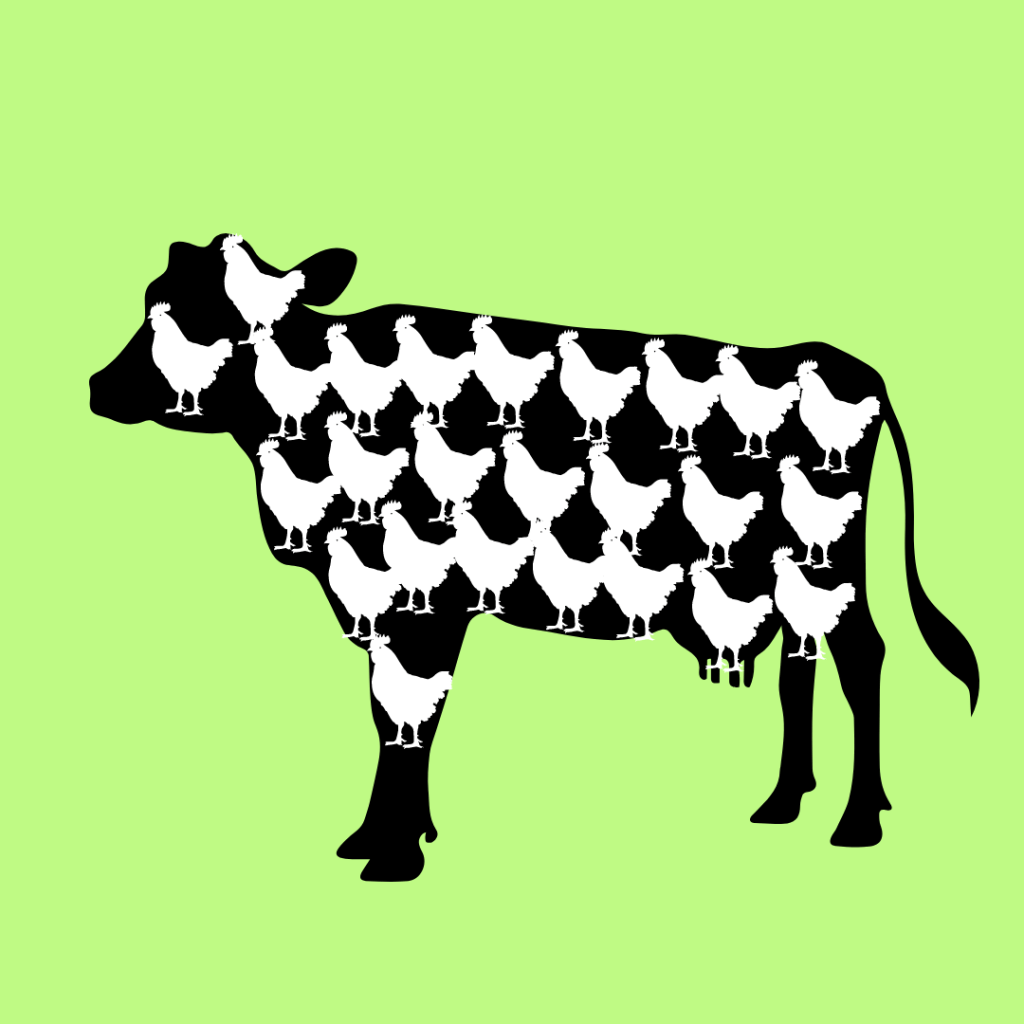
In addition, the digestive processes of cows and sheep produce methane, a potent greenhouse gas which is 25 times in carbon dioxide equivalent. It was probably not the most appropriate conversation at dinner, but when asked why cattle is most culpable, I said “they fart too much”, the simplest explanation I could give though not entirely accurate.
They fart too much.
Beyond Quitting Red
Of course, it would take more than quitting red meat to address all the emission problems from food consumptions. Food waste is another significant contributor and more unforgivable because it is absolutely unnecessary. Singapore has a relatively high level of food waste compared to other countries, estimated to be about 30% of food produced. Not only did the resources and energy used in the food production go to waste, but the decomposition process generates further emissions. I will explore the topic of food waste further in my subsequent writing.
Another unexpected source of high emissions from our food habits is the consumption of imported food. The transportation of food over long distances requires the use of fossil fuels, which results in the release of greenhouse gases into the atmosphere. In addition, the production of food in other countries may have lower environmental standards, resulting in higher emissions compared to local produce. I will look further into local produce options in my subsequent writing. Meanwhile, I am leaving a mental note to myself when I do my grocery shopping.
Back to Quitting Red
Back to the topic of quitting the red, I will keep a record of how I manage the year with this new resolution. Perhaps I will explore the Impossible substitutes when any cravings hit. Before that, I am going to see how I manage my working lunch today at a German burger grill joint, with some slight inconvenience only.
to be continued …
Note: This is the first episode of the series to be followed by updates on the year continues without red meat.
Like support theGreenBunnySG on social media and subscribe to our monthly journal.
Read theGreenBunnySG’s other stories here:
 The Green Bunny SG