as first published on Medium and LinkedIn under the same title
On the second day of the new year, I decided to find out more about my personal carbon footprint living in Singapore.
Tools to Calculate Ecological and/or Carbon Footprint
I tried a few free data resources/tools online, and preferred the Ecological Footprint Calculator from Global Footprint Network and the Climate Footprint Calculator from Nos Gestes Climat. Both have great visual representations and are relatively easy to use, although they are also different in some ways and each has its own advantages. Here is a key comparison:
| Ecological Footprint Calculator (Global Footprint Network) | Personal Climate Footprint Calculator (Nos Gestes Climat) | |
| Functions | Calculates ecological and carbon Footprints | Calculates carbon footprint only |
| Volume of data | More 2 million have used the calculator | More than 1 million have used the calculator |
| Granularity | Broad-based, less than 3 min assessment | Relatively more detailed, 10 min assessment |
| Geography | Global | EU/Swiss |
Ecological Footprint v. Carbon Footprint
Before we look into the assessments, there is a distinction between ecological footprint and carbon footprint.The carbon footprint is calculated carbon dioxide (equivalent) emissions and quantifies the greenhouse emissions of an individual, a population or an activity, while the ecological footprint is calculated in surface area (global hectares or number of planets) and measures the surface area necessary for the consumption of an individual, a population or an activity.
Inputs on Lifestyle and Assumptions
I would think I live an average lifestyle in Singapore. I live in an apartment of modest size in the Rest of Central Region (generally speaking, within 10km radius from central Singapore (Orchard area)). I eat a balanced diet (including meat, and red meat only rarely). I do not own a car as yet but use Grab (private car hire service) pretty often, which is very convenient. I used to travel more for work and holidays, but since the Covid hit, I’ve only clocked around 20 hours of flights last year. I do consider energy efficient in choosing my appliances, amongst other factors. Last but not least, I shop on average once a month for fashion and miscellaneous. My input to the assessments are based on these parameters.
Results – Surprise, Surprise
Living in a developed economy which is well-known as the “Garden City”, I would have thought that my carbon footprint, benchmarked against global averages, should be somewhat average if not better. How wrong was I. Below is a screenshot of my results from both assessments.
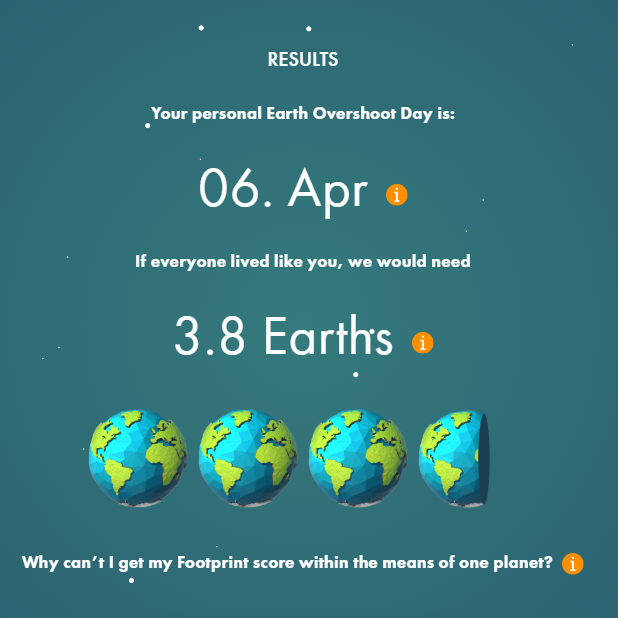
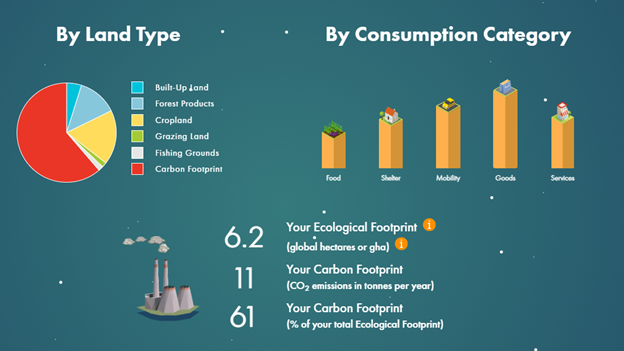
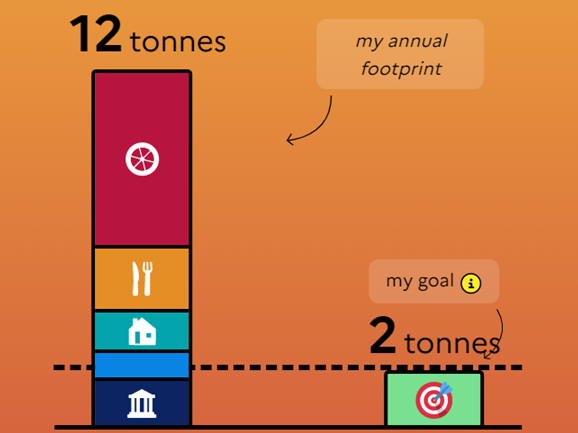
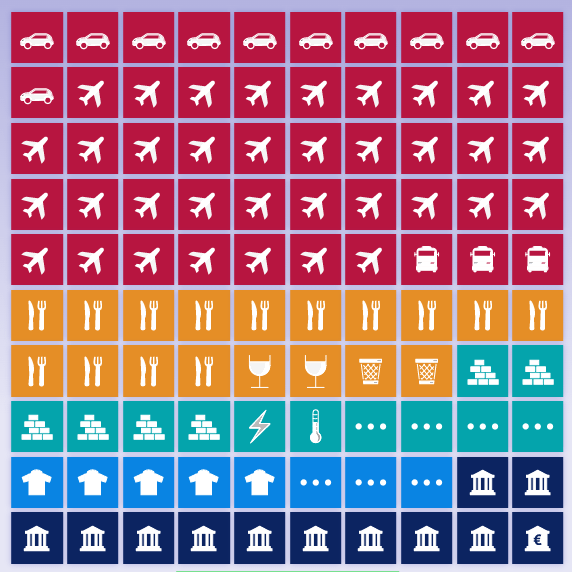
Note that the results from both assessments on my personal carbon footprint are somewhat similar, i.e. 11-12 tonnes of CO2e per year. That probably means the assessments are somewhat accurate, if not at least consistent.
Interpretation of the Results:
As seen from the results, what I thought was an average lifestyle in Singapore is in fact having much higher ecological and carbon footprints than the global average.
According to Global Footprint Network, the footprints calculated are often larger than what we expect because of allocation of societal impact on individuals which are beyond individual lifestyle choices. That might have explained the heavy attribution of Ecological Footprint to goods and services in the Global Footprint Network’s results. The allocation of the societal impact might be global one and is not country-specific because the assessment did not ask about my location.
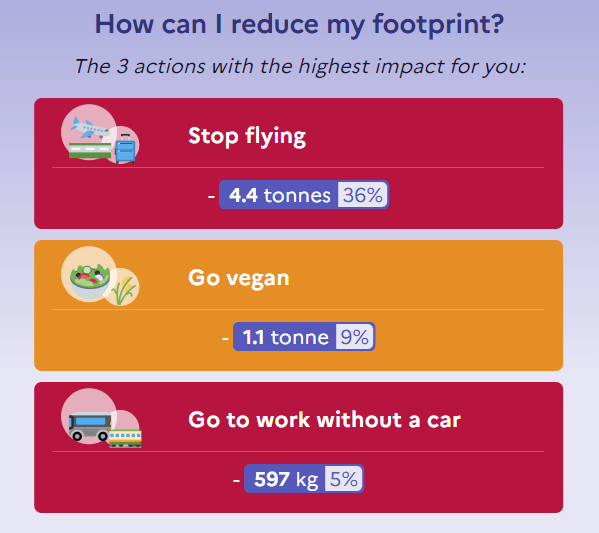
When it comes to Carbon Footprint, it seems that air travel is the highest contributor based on the breakdown from Nos Gestes Climat. For only 20 hours of flights last year, I have single-handedly contributed 4.4 tonnes of CO2e, and that is just for a less travelled year.
The other two top actions recommended that could significantly reduce my carbon footprint includes becoming a vegan and go to work by public transport.
How do I Feel?
Honestly, my first reactions to these results were disbelief and despair. It seems that it would require tremendous efforts to change my personal lifestyle to make some measurable difference in my footprints.
Would it be reasonable to expect no overseas travelling at all for someone living in Singapore (which is a small island with no train alternative to neighbouring countries at the moment)? Would it be possible to suddenly become a vegan for the environment when I personally believe in a more balanced diet for a healthy lifestyle? Even if I did miraculously implement the top three actions (which would translate to about 50% reduction in my total carbon footprint), by my own individual effort, I still could not lower my footprints to the goals according to these assessments. Instead of feeling the urgency of change, I felt despair. We are doomed, aren’t we?
It may be difficult to imagine that collectively, we could do much better than what we can achieve individually. Some may bank their hopes on new technologies, which have shown progress and promises but the future is always shrouded in uncertainties. Others may look to the governments and supra-governmental organizations to ensure that the macro-targets are achieved at all costs.
I don’t think I am typically pessimistic, but the results from these assessments seem to suggest that some pessimism is actually realistic.
Should we therefore give up as individuals? No! Regardless of how much difference we can make individually, there is still some difference we each make from our efforts. We may not be able to rely on those alone to save the future of humanity, but with all the efforts collectively, perhaps we could still stand a chance.
I still want to try my best, for it is better to die trying than not having tried at all. Knowing my current footprints is the first step, followed by making my own plan to reduce what I reasonably can. Then share the message in our own ways, and we all shall keep trying.
 The Green Bunny SG
One response to “Footprints 2022”
[…] My Footprints 2022; […]
LikeLike